-
Autonomous Robots
Autonomous Robots
Case Introduction
Fire and water are ruthless; fire safety directly impacts the well-being of the public and involves the safety and interests of the entire society. Firefighting work is divided into three major sectors: fire protection products, fire protection engineering, and fire protection services. As the logistics support base for firefighting, the intelligent and digital management of fire product warehouses plays a crucial role in ensuring timely response to material needs.
Elevator-Based Layer Transfer
Flexible Intelligent Solution Performs Even Better
Traditional fire protection product warehouses suffer from high personnel discretion and difficult management, with rising labor costs creating operational pressure. Moreover, traditional methods of information feedback and task assignment are inefficient, with long response cycles. Facility and equipment inspections are conducted using paper-based records, making it difficult to locate and track information, resulting in high consumption of human and material resources.
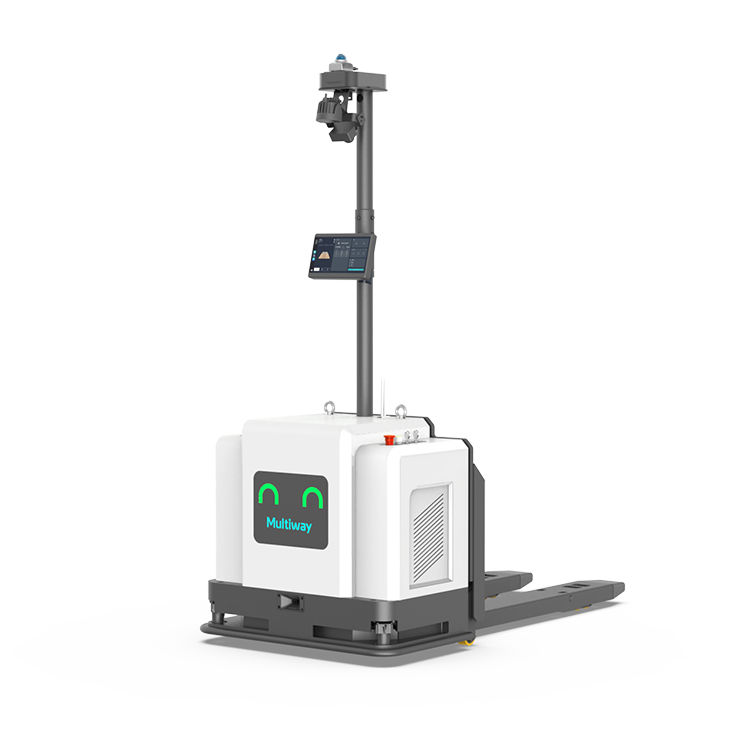
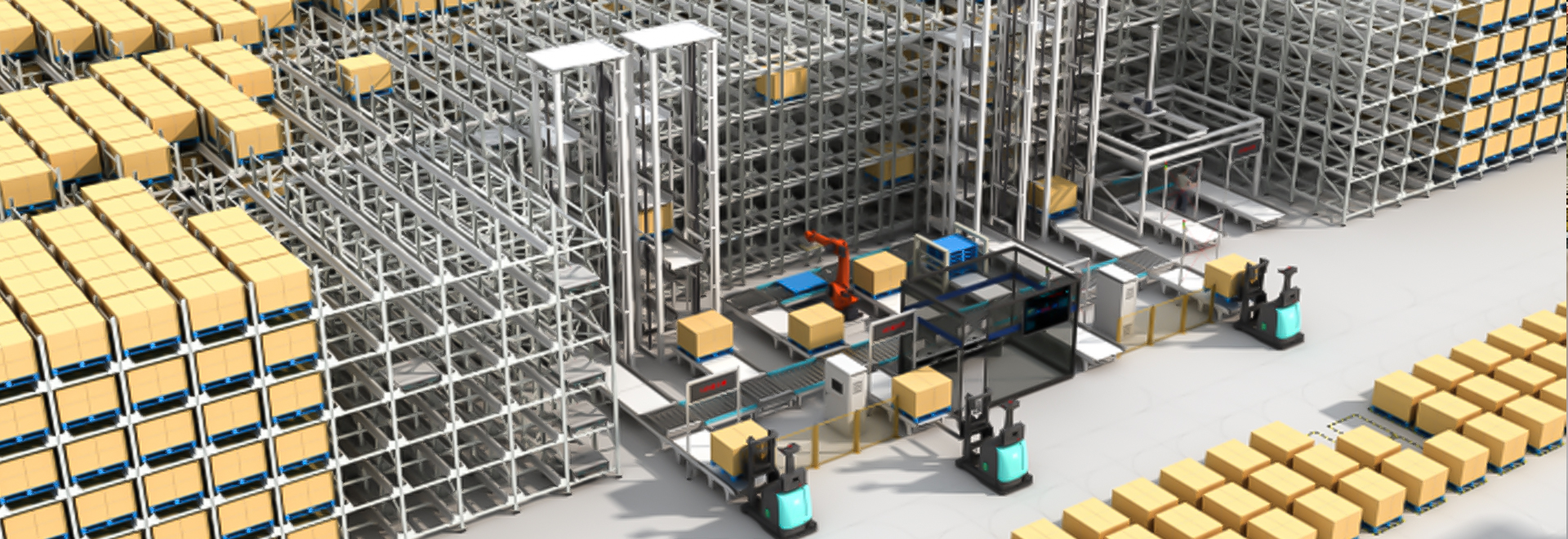
Multiway Robotics introduced the MW-SL10 stacker-type autonomous forklift and its flexible intelligent logistics solution to achieve efficient transportation of inventory materials and visualized inventory management, promoting the development of intelligent production and warehouse logistics systems.
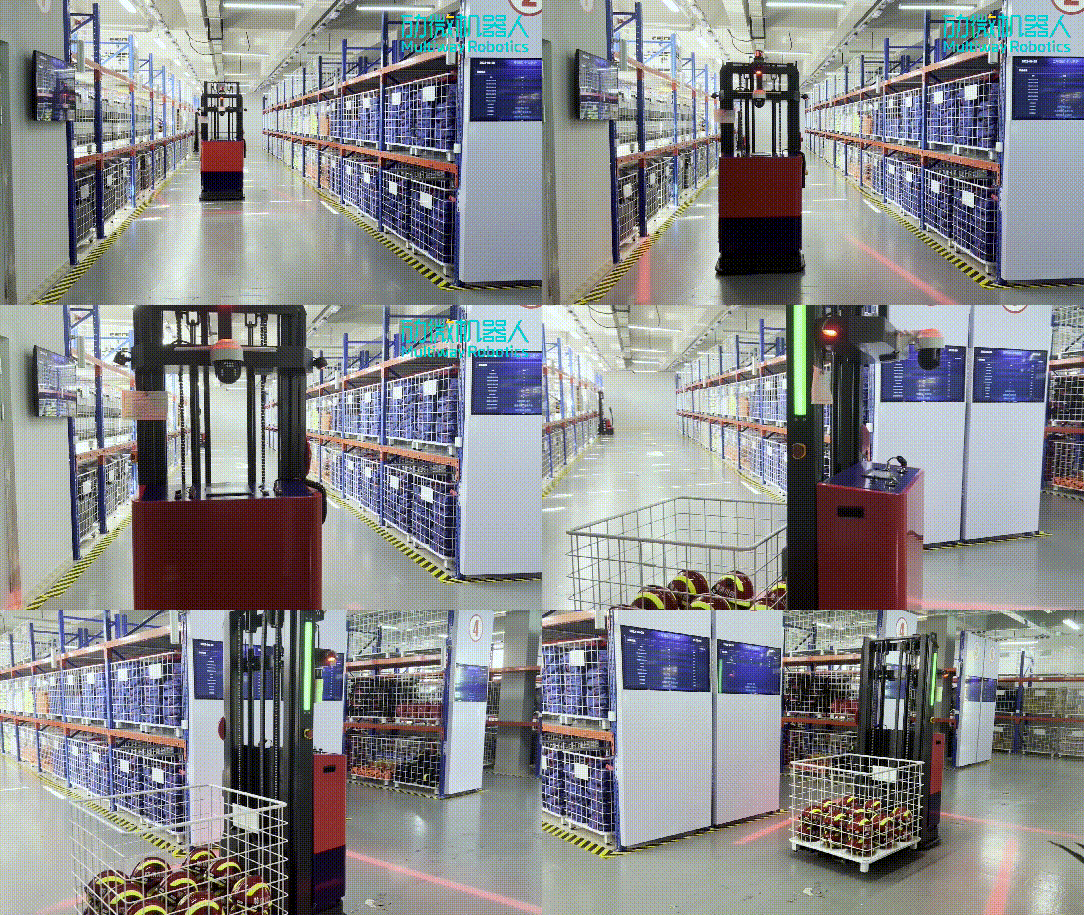
The solution employs the lightweight MW-SL10 stacker-type autonomous forklift for vertical transfers between storage areas and transfer points. Operators issue tasks via a tablet. For outbound operations, the forklift departs from the standby point, uses the elevator to move between floors, quickly enters the storage area to handle cages, and, after passing the RFID location recognition zone, transports the cages to the transfer point for unloading. Inbound operations follow the reverse process.By integrating with the RFID location recognition system and elevator control equipment, the solution optimizes information processing and handling efficiency.
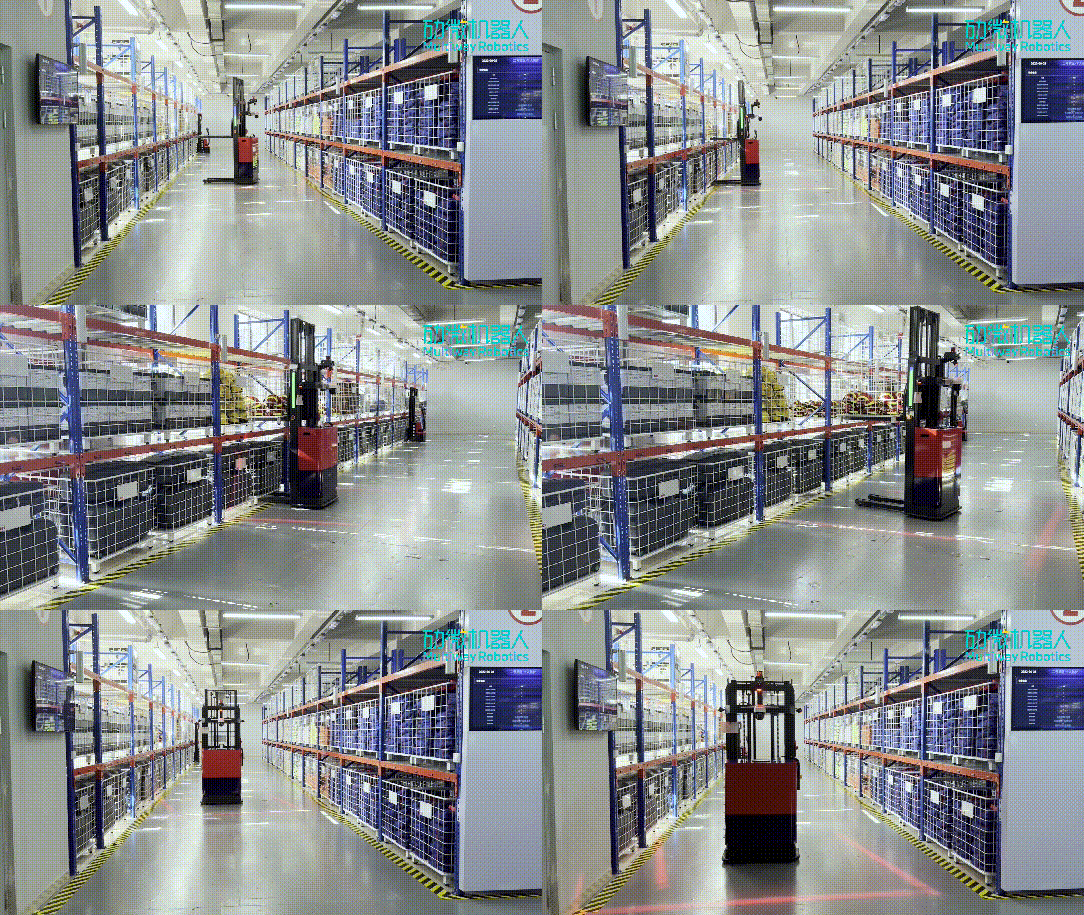
In terms of operational scenarios, from simple indoor transfers to coordinated indoor-outdoor operations, different stages and environments have varying material handling requirements. The autonomous forklift delivers high flexibility and precision, improving handling efficiency and accuracy, and perfectly meeting the demands of full indoor and outdoor scenario operations.
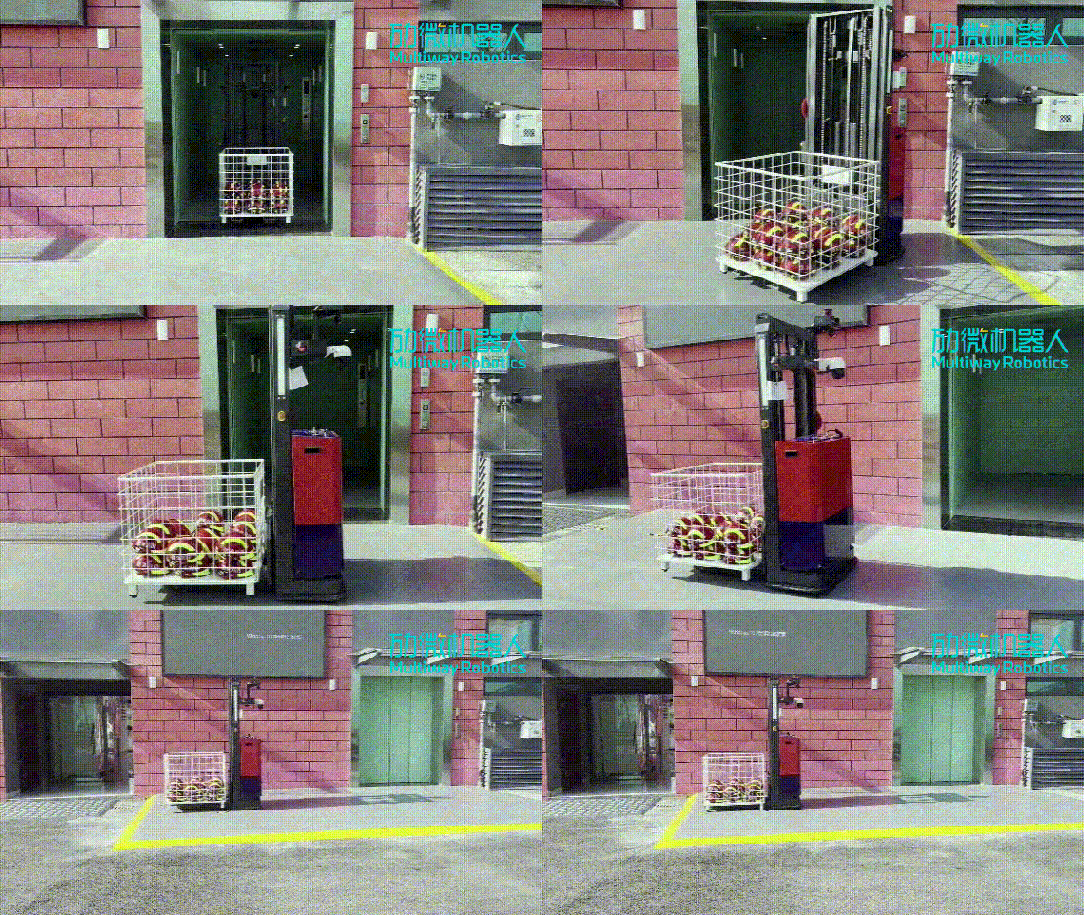
During autonomous forklift operations, vehicle safety is enhanced through multiple measures, including safety sensors, algorithm-based control systems, and vision-assisted protection. Safety sensor protection: voice alarms, vehicle width indicator lights, obstacle-avoidance radar, safety edges, and emergency stop buttons. Control system protection: path deviation protection, positioning anomaly protection, communication fault protection, and component fault protection. If any component of the vehicle malfunctions, the system immediately triggers a stop and issues an alert.
In addition, the vision system provides safety assistance. Leveraging deep learning, big data, and AI algorithms, it monitors storage locations and assists in safety supervision. The system issues warnings for safety risks such as unauthorized personnel entry or improper operations, and triggers alerts if the deviation of stored goods exceeds preset thresholds.
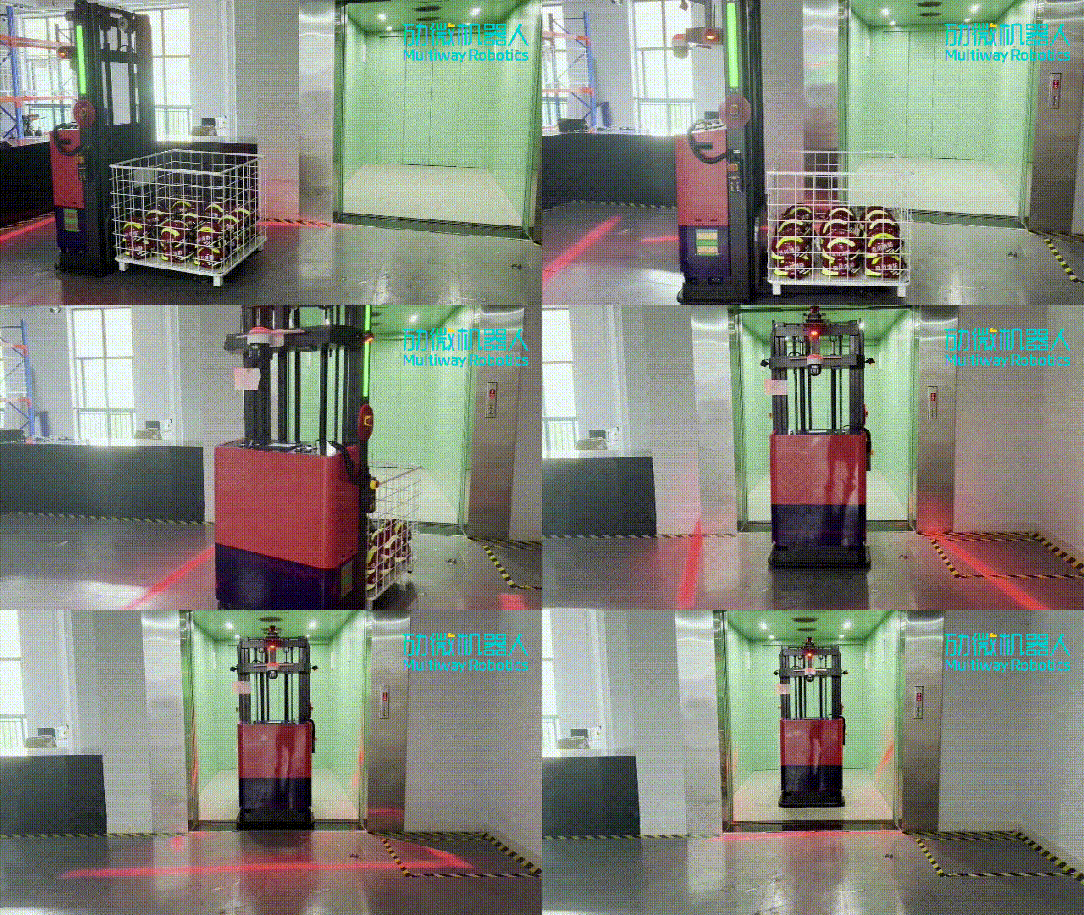
With the continuous growth of market demand, logistics scenarios are rapidly evolving and becoming increasingly diversified. As requirements continue to escalate, more flexible solutions and scenario-adapted products are needed to meet market demands that are becoming increasingly diversified, fragmented, and complex.

Offices
United States ● Atlanta l Germany ● Duisburg
Korea ● Seoul l Japan ● Tokyo l China ● Shenzhen
Tel: +86-133-9286-4873
Email: sales@mw-robot.com


Message